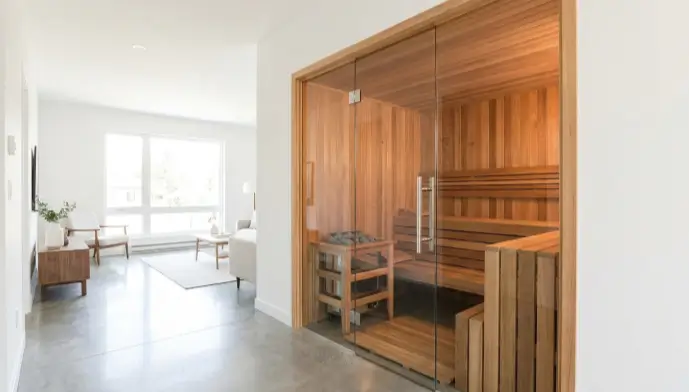
A well-built indoor sauna can run for well over a decade, but only with routine upkeep: wiping down benches after each session, checking and replacing heater stones on schedule, inspecting the door gasket and panel joints yearly, and managing humidity in the room around the cabin, not just inside it. Skipping these small, cheap habits is what turns a ten-year cabin into a five-year one, usually through mildew, a warped bench board, or a heater that has to work harder than it should.
1. Wipe Down Benches and Floor After Every Session
Sweat and residual moisture left on cedar or hemlock benches will slowly darken and soften the wood over months of regular use. A quick wipe with a clean towel or a soft brush and plain water after each session, followed by leaving the door open to air out, prevents most of this. Avoid soap or standard household cleaners on interior wood, since residue left on a surface that gets heated repeatedly can off-gas and affect both the wood and the air quality of the next session. A sauna-specific bench cleaner, used sparingly every few weeks rather than after every single session, is the safer choice for anything beyond a plain water wipe-down.
2. Inspect and Replace Heater Stones on a Schedule
Heater stones crack and break down from repeated heating and cooling cycles, and cracked stones both hold less heat and can occasionally pop or flake. Check stones every few months for visible cracking or crumbling, and plan on a full stone replacement roughly every one to three years depending on use frequency and local water mineral content if you pour water for steam. Stack stones loosely enough that air can circulate between them, since tightly packed stones heat unevenly and slow down recovery time between sessions.
3. Check the Door Gasket and Panel Joints Once a Year
A compressed, cracked, or missing door gasket is one of the most common and cheapest-to-fix causes of a sauna that suddenly seems to take longer to heat. Set a yearly reminder to check the gasket’s condition and replace it if it no longer seals fully when the door is closed. At the same time, look over the tongue-and-groove joints on interior panels for any gaps that have opened up as the wood has cycled through hundreds of heat-and-cool cycles; a small gap can usually be addressed with manufacturer-approved sealant rather than a full panel replacement if caught early.
4. Manage Humidity in the Room, Not Just the Cabin
Most sauna maintenance advice focuses on the cabin itself and skips the room around it, which is a mistake for an indoor install. Leaving the cabin door propped open after a session lets residual heat and moisture escape into the room rather than sitting trapped inside, and running an exhaust fan or a dehumidifier in a basement or enclosed room for twenty to thirty minutes afterward keeps that moisture from settling into nearby drywall, flooring, or insulation. This is especially important in colder months when a closed-up basement room already runs higher humidity than the rest of the house.
5. Clean and Descale the Heater Housing
Dust and lint accumulate on and around a heater’s housing over time, particularly in a finished basement room with carpet or furniture nearby, and this buildup is both a minor fire consideration and a drag on heater efficiency. Vacuum around the heater base every month or two and wipe down the exterior housing with a dry cloth when it is fully cooled. In areas with hard water, mineral buildup on stones and the tray beneath them should be cleaned out periodically as part of the same routine, since heavy scale buildup can slow heat transfer from the element to the stones.
6. Watch for Early Signs of Wood Movement
Because sauna wood cycles through significant temperature and humidity swings, it moves more than furniture-grade wood elsewhere in the house. A bench board that has started to cup slightly, or a panel seam that has widened, is worth addressing while it is a small fix rather than waiting until it becomes a larger repair. Manufacturers typically sell replacement bench boards and panel sections that match the original cabin, and keeping a small stock of the correct wood species on hand for a well-used cabin saves time if a board does need swapping.
See also: How Blockchain Technology Improves Business Operations
7. Know When to Call for Parts Versus a Full Replacement
A well-maintained cabin rarely needs full replacement; heater elements, stones, gaskets, and individual bench boards are all serviceable parts on most name-brand cabins. Keeping the original model number and heater spec on hand makes ordering the correct replacement part far faster than guessing years later. Owners looking to restock stones, gaskets, or bench hardware, or to compare a full replacement cabin against the cost of ongoing repairs on an aging unit, can check current parts and models at SweatDecks alongside other established retailers before deciding which route makes more sense for an older installation.
8. Keep a Simple Maintenance Log
A short log, even a note on a phone, tracking when stones were last replaced, when the gasket was last checked, and when the heater housing was last cleaned, makes it far easier to stay ahead of wear rather than reacting to it. This is especially useful for a cabin used daily or near-daily, where small issues compound faster than in a cabin used once or twice a week. A log also helps when ordering replacement parts, since knowing the approximate age of the stones or gasket narrows down whether a strange smell or slow heat-up is a normal wear item or a sign something else needs attention.
What the Research Says About Maintaining Consistent Use
Consistent upkeep matters because the reported health associations with sauna bathing are tied to regular, sustained use rather than occasional sessions in a poorly maintained cabin. A 2018 review in Mayo Clinic Proceedings summarized cardiovascular associations reported across studies of Finnish sauna bathers who used well-functioning cabins several times a week over years. A systematic review in Evidence-Based Complementary and Alternative Medicine reached similar conclusions about regular dry sauna bathing specifically, underscoring that the studies behind these associations involve consistent, comfortable sessions, not a cabin that has fallen into disrepair and become an occasional chore to use.
Frequently Asked Questions
How often should sauna heater stones be replaced? Inspect every few months for cracking, with a full replacement roughly every one to three years depending on use frequency and water mineral content.
Can you use regular wood cleaner or oil on sauna benches? No. Standard oils and varnishes are not rated for repeated high heat. Use a sauna-specific cleaner or plain water and let the wood air-dry.
How often should the door gasket be checked? At least once a year. A worn gasket lets heat escape and forces the heater to run longer for the same result.
Is indoor humidity control necessary between sauna sessions? Yes. Propping the door open and running an exhaust fan or dehumidifier afterward prevents moisture from settling into nearby walls, flooring, or the cabin’s own panels.
References
- Cardiovascular and Other Health Benefits of Sauna Bathing: A Review of the Evidence, Mayo Clinic Proceedings, 2018
- Clinical Effects of Regular Dry Sauna Bathing: A Systematic Review, Evidence-Based Complementary and Alternative Medicine, 2018
- Benefits and risks of sauna bathing, The American Journal of Medicine, 2001
By Marcus Feldman
